
Most people only discover there are two ways to take fingerprints when one of them fails. Prints rolled in ink are mailed off, the RCMP rejects them for quality three weeks later, and the applicant starts again. Digital capture was designed to prevent exactly that — and for anyone in Canada, it is now the standard route to a certified criminal record check.
The choice between the two methods is not always yours to make, and not every provider offering a scanner is authorized to send anything to the national repository. Knowing both distinctions before you book saves the most common and most expensive mistake in the process.
This guide explains how digital fingerprinting works, how it compares with traditional ink, which providers are authorized to submit, when a fingerprint-based check is required, and what to bring to the appointment.
Need help with fingerprinting or criminal record check in Canada? Legalization Service Centre is an accredited by RCMP fingerprinting agency. Contact us via our form, call us at +1-613-501-0555 (WhatsApp available) or +1-800-857-1215 (toll-free), fax us via 1-844-786-2001, or text us at info@lsccanada.ca.
What Digital Fingerprinting Is

Digital fingerprinting replaces ink and paper with a certified scanner. Your fingers are rolled across a glass platen, and software records the ridge detail as high-resolution fingerprint images. The technician sees the result on screen immediately, which is the whole point: poor impressions are retaken before you leave, rather than discovered as a rejection weeks later.
Once the prints are recorded, the file goes to Canadian Criminal Real Time Identification Services, the branch that maintains the national repository of criminal records. Nothing travels by mail, and nothing can be lost in transit.
Live Scan Technology
The term you will see most often is live scan. Live scan fingerprinting uses technology that checks each impression against quality standards as it is taken — pressure, rotation, completeness of the ridge pattern. A fingerprint technician guides the process, rolling each finger from nail edge to nail edge, then capturing flat impressions of all four fingers and both thumbs. The result is a standard fingerprint set identical in layout to a paper card, but in digital form.
Digital or Ink: Which Is Better?

For anyone in Canada, digital wins on almost every count.
- Quality control. Live-scan fingerprinting flags poor impressions on the spot. Traditional ink does not
- Speed. Digital submissions reach the RCMP the same day. Paper fingerprint cards must be mailed, received and converted first
- Rejection risk. Ink and roll fingerprints are rejected more often, usually for smudging or incomplete rolls
- Tracking. Electronic fingerprinting produces a Document Control Number linking your prints to the search from the moment they are taken
Ink still has a role. Applicants abroad cannot be scanned in Canada, so they have ink and roll prints taken locally on an official card and mailed to an approved Canadian provider, which converts the card and submits it digitally. Roll fingerprinting in ink is the only option there — but where the choice exists, it is not a close call.
Why Prints Get Rejected
Rejections are expensive because each one means a new appointment, and for ink cards a second courier cycle. The causes are consistent:
- Dry or worn skin. Manual workers, older applicants and people who wash their hands frequently often have faint ridges. A technician can use a conditioning agent and adjust pressure; on paper, the problem is usually invisible until the card is rejected
- Incomplete rolls. Each finger must be rolled from one nail edge to the other. Partial rolls are the single most common reason paper cards fail
- Smudging and over-inking. Too much pigment fills the ridges and the pattern disappears
- Wrong sequence. Prints placed in the wrong boxes on a card cannot be matched
- Injuries or missing fingers. These are acceptable if recorded properly on the form; unrecorded, they look like errors
Digital capture eliminates most of these because the scanner refuses a poor impression and asks for it again. That single difference explains why applicants in Canada rarely need a second appointment, while paper cards from abroad are rejected far more often.
Preparing Your Hands
A small amount of preparation helps. Avoid heavy hand cream on the day of the appointment, keep hands clean and dry, and mention any injury or skin condition to the technician at the start rather than after a failed capture.
Who Can Submit Fingerprints to the RCMP
Not every business is authorized to file prints with the national system. A private fingerprinting company must be accredited by the RCMP before it can offer the service to the public. Accreditation covers security and administrative operations, personnel screening, physical site inspection, and certification of the devices and network connection.
Only an RCMP accredited fingerprinting provider can send prints electronically. A business without that authorization may still take your prints, but cannot send them anywhere that matters. Before booking, confirm the provider appears on the current published list of approved companies.
Local Police or a Private Agency?
Your local police service can take prints and process applications, including vulnerable sector checks, which private agencies cannot provide. In Ontario, residents of OPP-policed communities follow their own rules — see our OPP criminal record check guide. For everything else, a professional fingerprinting agency is usually faster, offers more appointment times, and handles the paperwork that follows.
If you are searching for digital fingerprinting services in Toronto, Vancouver or anywhere else, the same test applies: accreditation first, convenience second. Legalization Service Centre is an RCMP-accredited digital fingerprinting company — we provide digital fingerprinting services at our Ottawa office by appointment, and our page on approved providers explains the authorization itself.
Need help with fingerprinting or criminal record check in Canada? Legalization Service Centre is an accredited by RCMP fingerprinting agency. Contact us via our form, call us at +1-613-501-0555 (WhatsApp available) or +1-800-857-1215 (toll-free), fax us via 1-844-786-2001, or text us at info@lsccanada.ca.
What Happens to Your Data
Biometric data is sensitive, and the rules reflect that. Accredited providers must meet the security standards inspected during accreditation, transmit over a certified connection, and restrict who can access the files. Ask any provider how long they retain your images and who can see them; a firm that handles this properly will answer without hesitation.
When You Need a Fingerprint-Based Check

A name-based check searches police databases by name and date of birth. It is quick but inconclusive, because names repeat. A fingerprint-based check searches by biometrics, which is why it is required whenever identity genuinely matters. Our guide to choosing the right RCMP form explains the difference in detail:
- Immigration — permanent residence, work permits and visa applications, in Canada and abroad
- Canadian citizenship, where fingerprints may be requested as part of the file
- Employment — background screening in regulated sectors, and digital fingerprinting for employment in government or security roles
- Record suspension applications, which require a fingerprint-based record from the RCMP
- Adoption, licensing and foreign police clearance requests
- A name match on a standard check, where fingerprints settle who the record belongs to
Fingerprinting for immigration is the single largest category. Our guide to the check for immigration covers that process, and our guide to what the result shows explains the result.
The Digital Fingerprinting Process
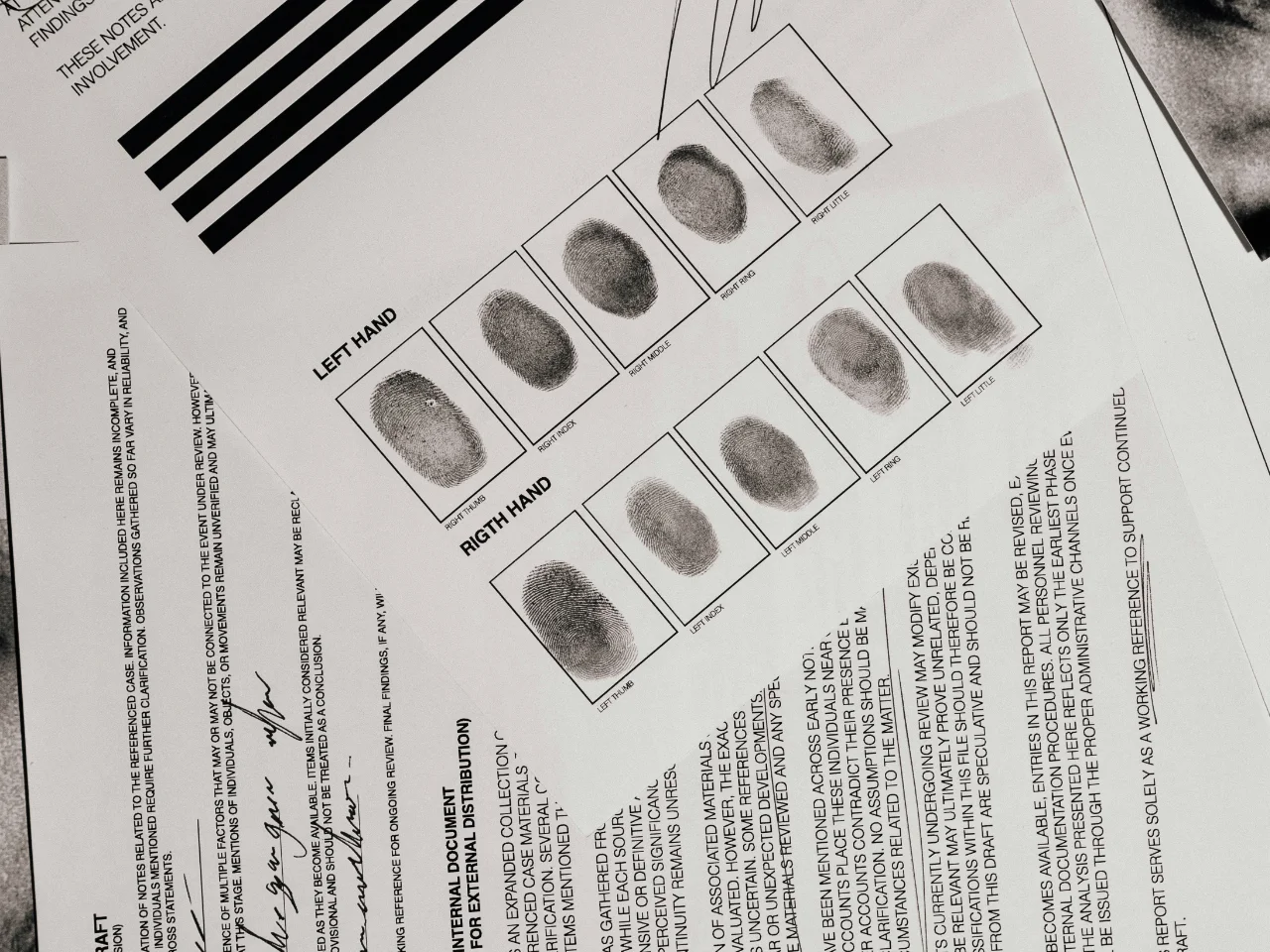
The appointment itself takes minutes. Preparation takes longer.
- Book a fingerprinting appointment with our agency here: https://calendly.com/legalizationservicecentre/30-minute-meeting
- Bring two pieces of government-issued identification, at least one with a photo
- State the reason — immigration, employment, citizenship — since it cannot be changed after submission
- Fingerprints are captured and reviewed on screen
- Prints are submitted electronically to the RCMP, generating your Document Control Number
- Results are mailed to the address on your application
The service fee covers capture and submission service; the RCMP fee for the search is charged separately.
From Abroad
Applicants outside Canada follow the paper route: prints taken locally on an official card, mailed to an accredited agency, digitized and submitted. Our online RCMP criminal record check handles fingerprint submissions from anywhere in the world.
Frequently Asked Questions
How long does the digital fingerprinting process take?
The appointment takes minutes. Results typically follow within a few weeks, faster where nothing is found.
Is digital fingerprinting accepted for every purpose?
Yes. A digital submission produces the same certified fingerprint result as an ink card, without the transit time.
Can I get my fingerprints taken digitally if I live abroad?
Not for this purpose. Scanning must be done in Canada; abroad, paper cards are used.
Does the result need certifying for use overseas?
Often. An apostille applies to Convention countries — our explainer on what an apostille certifies and the guide to the federal authentication process cover that route; the Gulf requires full legalization, starting with UAE Embassy attestation at the mission in Ottawa and including the Qatar and Kuwait missions.
Get Fingerprinted the Right Way
Choose an approved provider, choose digital capture wherever you can, and decide in advance whether the certificate will be used abroad. A few minutes of planning at the start saves weeks at the end. Those three decisions remove most of the delay from the fingerprinting in Canada process. We handle background screening services from capture through to an apostille or legalization of the finished certificate.
Need help with fingerprinting or criminal record check in Canada? Legalization Service Centre is an accredited by RCMP fingerprinting agency. Contact us via our form, call us at +1-613-501-0555 (WhatsApp available) or +1-800-857-1215 (toll-free), fax us via 1-844-786-2001, or text us at info@lsccanada.ca.