
Have you ever sat down to update your resume and wondered if you should “adjust” your start date at a previous job to cover a three-month gap, thinking no one will ever find out? In a competitive job market, it is tempting to polish your work history to appear as the perfect candidate, but many Canadians are surprised to learn how easily a standard background check can reveal the truth.
Since Canada ratified the Hague Apostille Convention in early 2024, which made it easier to validate documents overseas, the employment process has undergone a major change. Domestically, though, the question of whether background checks reveal employment history still stands. For many homeowners looking to hire domestic help or professionals applying for a new role, the answer to this question is vital for maintaining transparency and trust.
In this article, we will explore what a potential employer sees when they run a background check, the specific details included in an employment history report, and the legal framework that protects both the employer and the applicant. Different types of background checks will be discussed as well, and why verifying the past employment history is a crucial step in building a reliable team.
Need help with document apostille/legalization/authentication/attestation — and/or criminal record check in Canada? Contact us via our form, call us at +1-613-501-0555 (WhatsApp available) or +1-800-857-1215 (toll-free), fax us via 1-844-786-2001, or text us at info@lsccanada.ca.
Do Background Checks Show Employment History?

If you are curious about whether background checks show employment history, then the short and direct answer is YES.
Yes, they do. One of the main components of professional background checks is employment verification. When an employer wants to confirm your employment history through a background check, they are searching for a track record of honesty and dependability rather than just criminal history.
A thorough background check usually involves a thorough examination of your previous employment, despite the common misconception that a background check just looks at a criminal record or credit report. Correspondingly, this approach allows employers to see important details about the candidate’s employment, such as s the names of past employers, their job titles, and their specific dates of employment.
However, it is important to distinguish between the types of checks, particularly a basic check or a more comprehensive one, which is a background check. A basic check, typically used for entry-level volunteer positions, might only look at criminal history. But for any professional service or high-responsibility role, many employers use thorough background checks that include employment and education verification.
How Employers Verify Your Work History
Employers typically verify your past employment in one of three ways:
- Direct Contact: Contacting either the candidate’s former boss or supervisor or the HR division of their prior job.
- Employment Databases: Using services like “The Work Number” or other specialized employment databases that store payroll records.
- Background Checking Agency: Hiring a professional service like LSC to handle the heavy lifting and verify previous job history through official channels.
What Information is Included in an Employment History Report?

When a background check uncovers your past employment history, the resulting background report is quite detailed. Employers need to confirm that the person they interviewed is the same person described on the job application.
A standard employment background check will usually provide the following concrete details:
- Employer Names: Every company you listed on your resume (and sometimes those you didn’t).
- Job Titles: Whether you were actually a “Manager” or an “Assistant.”
- Dates of Employment: The exact month and year you started and finished.
- Reason for Leaving: If the previous employer is willing to share (this is often limited to “resigned” or “terminated”).
- Eligibility for Rehire: This is a key metric of both work style and job performance of a particular employee.
The Reality of Resume Discrepancies
Statistics show that an estimated 40% of applicants lie on their resumes, and roughly 75% of employers have caught these lies during the background check process. Common fabrications include:
- Inflating job titles (e.g., calling oneself a “Director” when they were a “Lead”).
- Hiding gaps in employment history by stretching dates.
- Claiming skills or certifications that don’t exist.
These lies may help you get an interview, but once the background check is completed, they frequently result in rejection. Regardless of your abilities, skills, and how well you nail your job interview, it is difficult to overcome a negative impression if your background report has notable inconsistencies.
Different Types of Background Checks and Verification Services
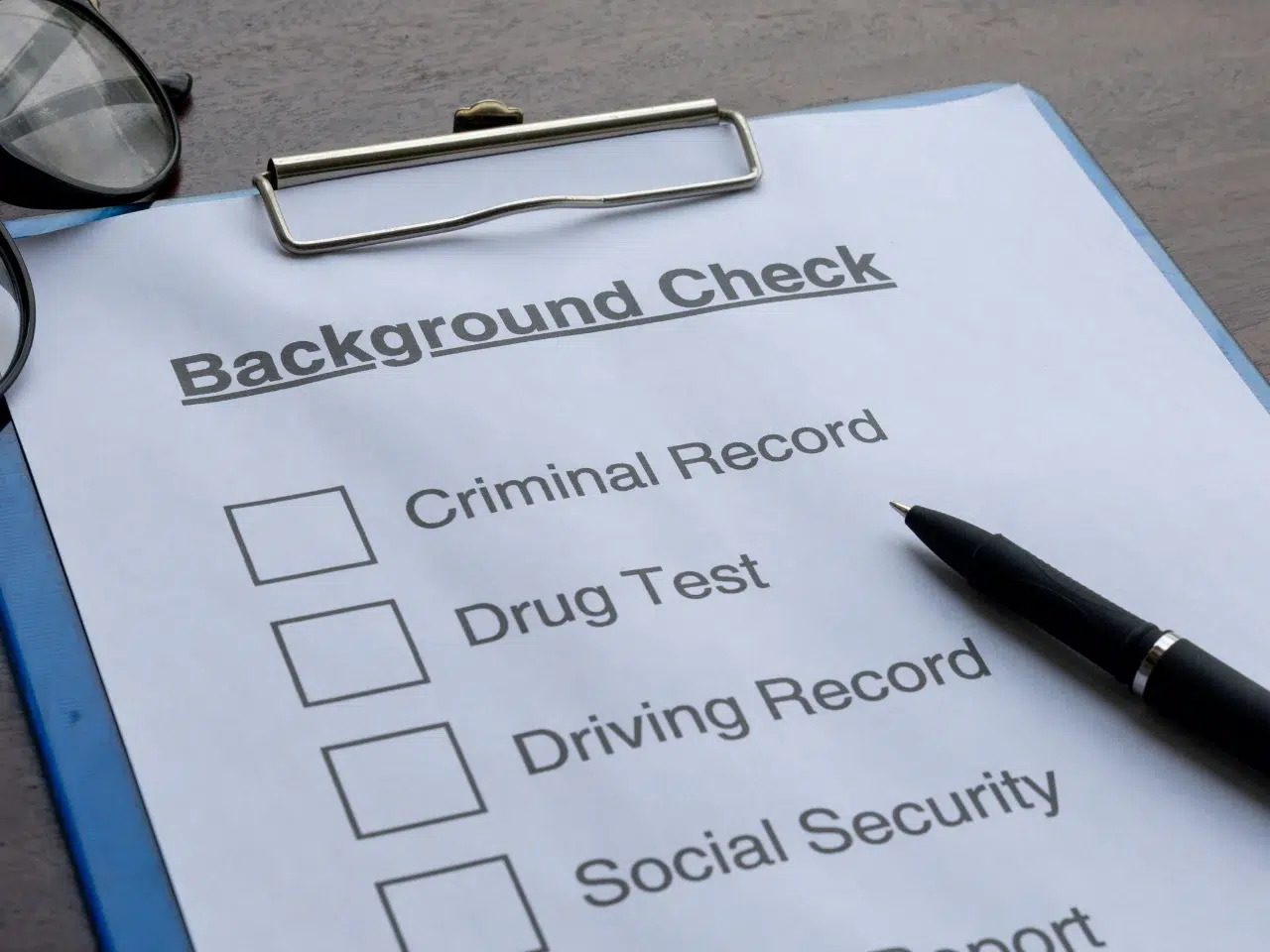
Not every background check is created equal. Depending on the job fit and the industry, an employer may choose a specific level of scrutiny.
1. Comprehensive Pre-Employment Background Checks
A comprehensive pre-employment background check is considered to be the “gold standard” in employment, as it particularly checks the credit history, education verification, criminal checks, and a thorough investigation of the candidate’s previous jobs.
2. Professional Reference Checks
Sometimes, a potential employer wants to know more than just if you worked there; they want to know how you worked. Speaking with former employers to learn about your work history and performance is part of a reference check.
3. Credentialing and Licensing Checks
In regulated industries like healthcare or finance, employers are required to verify that you have the specific work history through a background check needed for licensing. For example, a nurse’s work experience must be verified before they can be legally cleared to work in a Canadian hospital.
4. Basic Criminal Record Checks
While these don’t usually show your job history, many employers use them as a starting point. In order to provide a complete profile, an RCMP Criminal Record Check is frequently combined with an employment background check when you apply for a position.
Understanding the Legal Requirements for Background Screening

In Canada, the background check procedure is not “free-for-all.” Strict regulations are in place to safeguard job seekers’ privacy.
The Need for Written Consent
Under the Fair Credit Reporting Act (FCRA) (which influences many Canadian privacy standards) and provincial privacy laws, employers must obtain written consent from the applicant before they can run a background check. You cannot be “surprised” by a check; you must be informed that a background check often includes these elements.
Discrimination and Fair Hiring
As stated in Title VII of the 1964 Civil Rights Act (similar to the Canadian Human Rights Act), employers are prohibited from utilizing background checks to discriminate on the basis of race, religion, or sex. Locally, the main goal of the Canadian Human Rights Act, which was established in 1977, is to guarantee equality of opportunity. Discrimination on the grounds of demographic (race, age, sex) categories and numerous other categories is forbidden. For example, they cannot choose to only verify the work history of certain groups while ignoring others.
Adverse Action Procedures
Employers must take certain actions if they wish to reject a candidate due to the results of a background check. This entails giving the candidate a copy of the background report and an opportunity to clarify any inconsistencies. Perhaps you have a valid reason for a gap in your employment dates; the law allows you to voice that.
Need help with document apostille/legalization/authentication/attestation — and/or criminal record check in Canada? Contact us via our form, call us at +1-613-501-0555 (WhatsApp available) or +1-800-857-1215 (toll-free), fax us via 1-844-786-2001, or text us at info@lsccanada.ca.
Why Verifying Past Employment History Matters for Homeowners and Businesses
You might be thinking, ” Why are background checks for employment history important, especially if you are a homeowner hiring a nanny, contractor, or personal assistant, or if you’re a business owner looking to expand. “Trust but verify” is the best policy in Canada’s competitive labour market. Verification is often the only way to ensure that the person entering your home or business has the qualifications they claim.
Building a Reliable Workforce
When you conduct a background check, you are doing more than just verifying facts. You are:
- Ensuring Job Fit: Does their past job experience actually prepare them for the role?
- Protecting Your Assets: A history of honesty on a resume usually translates to honesty on the job.
- Reducing Turnover: Hiring the right person the first time saves thousands of dollars in retraining.
The Role of International Documents
With Canada joining the Hague Apostille Convention on January 11, 2024, it is now easier than ever to verify documents for use abroad—or for international candidates to provide proof of employment from their home countries. If you are hiring someone with international experience, an apostille certificate can verify their credentials with the same authority as a local Canadian document.
Why Trust Legalization Service Centre for Your Background and Document Needs?

Navigating the process of authentication, legalization, and background checks can be overwhelming. Whether you are a job seeker needing to verify your own history for a move abroad, or an employer needing a criminal record check for a new hire, you need a partner who knows the Canadian system inside and out.
Over 15 Years of Expertise
Since 2009, Legalization Service Centre (LSC) has been constantly serving high-quality document services across Canada. Our growing team have seen the industry evolve, including the major shift to the Apostille system in 2024. Additionally, we offer expert advice to guarantee that your important documents, specifically birth certificates, college degrees, or criminal record checks, meet international requirements and standards.
Fast Turnaround for Busy Professionals
We recognize the urgency of the job market. That is why we offer some of the fastest turnaround times in the industry, with some apostille services available in as little as one business day. We work with Global Affairs Canada and all provincial authorities to make sure your paperwork is handled correctly the first time.
Comprehensive Support Across Canada
From our headquarters in Ottawa to our offices in Toronto, Vancouver, and Montreal, we serve clients from coast to coast. We take care of the logistics, so you can concentrate on your next major hire or career move.
Documents We Regularly Help Authenticate and Legalize:
- Criminal Record Check Certificates (RCMP and Local Police)
- University Degrees and College Diplomas
- Birth, Marriage, and Divorce Certificates
- Power of Attorney and Corporate Documents
Transparency is the Key to Success
Whether you are an employer or a job seeker, the answer to “do background checks show employment history” shouldn’t be a source of fear. Instead, view it as a tool for transparency. Employers can use it to confirm your employment history and make sure you are assembling a fact-based team. It is a chance for job seekers to demonstrate their honesty and make a name for themselves as candidates with nothing to conceal.
With the knowledge of how background checks verify employment and what the background check process entails, you can confidently handle the hiring process. Don’t let obstacles related to documentation or verification impede your development.
Whether you need a criminal record check legalized for a job overseas or need to authenticate your professional credentials, the Legalization Service Centre is here to help. We simplify the complex so that you can move forward with your international adventures or local hiring needs.
Need help with document apostille/legalization/authentication/attestation — and/or criminal record check in Canada? Contact us via our form, call us at +1-613-501-0555 (WhatsApp available) or +1-800-857-1215 (toll-free), fax us via 1-844-786-2001, or text us at info@lsccanada.ca.