
Did you know? A clear result does not mean you have no criminal records. It means nothing was disclosable — which is a different statement entirely. Convictions time out, discharges expire from view, and a name-based search can miss criminal records belonging to someone with a different spelling of the same name.
Understanding what appears on each type of check, and what deliberately does not, matters to two groups: applicants who want to know what an employer will see, and employers who assume a clean page proves more than it does. If you have not yet settled which product to request, our guide to choosing the right criminal record check form covers that decision first.
This article sets out which police records are actually searched, what a basic criminal record check shows, what the middle and highest levels add, how long entries remain visible, and why some criminal records only surface when fingerprints are used.
Need help with document apostille/legalization/authentication/attestation — and/or criminal record check in Canada? Contact us via our form, call us at +1-613-501-0555 (WhatsApp available) or +1-800-857-1215 (toll-free), fax us via 1-844-786-2001, or text us at info@lsccanada.ca.
Which Databases Are Searched

Three systems hold the criminal records that a police record check can reach, and knowing which one is being queried explains most of the differences between results.
- The Canadian Police Information Centre. Maintained by the RCMP, CPIC is the national index queried by name and date of birth. It is the source for the overwhelming majority of check applications.
- The Police Information Portal. A national system that lets a police service query local police databases held by other forces — occurrences and records that never reached CPIC.
- The National Repository of Criminal Records. The fingerprint-indexed collection, searched only when a certified criminal record check is requested.
A basic criminal record check touches the first of these. An enhanced criminal record check, as third-party screening providers describe it, reaches into local police records as well, which is where criminal records that never made it to the national index tend to sit. Only the third involves biometrics.
What a Basic Criminal Record Check Shows

At the first level the answer is narrow. It discloses criminal convictions that have not been sealed by a record suspension, together with a finding of guilt under the Youth Criminal Justice Act where the law permits release — narrow circumstances, generally limited to certain government employment.
Two limits catch people out. A summary conviction can only be disclosed for five years, after which it drops out of view. And criminal records sealed under the Criminal Records Act do not appear at all.
What a Basic Check Leaves Out
- Charges that did not result in a conviction
- Outstanding charges or warrants
- Absolute and conditional discharges
- Judicial orders of any kind
- Any police contact that produced no charge
This is why a basic result answers a much smaller question about someone’s criminal records than most employers requesting the check believe.
What the Middle Level Adds

A criminal record and judicial matters check covers everything above and adds the court-related material. In most provinces the same product is called a police information check.
It shows:
- Criminal offences with outstanding charges before the courts
- Outstanding arrest warrants
- Absolute and conditional discharges still within the applicable disclosure period
- Peace bonds, probation orders and prohibition orders connected to convictions
Timing governs each entry in these criminal records. An absolute discharge stays visible for a year; a conditional discharge for three. After that the record exists but is no longer disclosable on this type of check.
What still does not appear is non-conviction information — the fact that an individual has been charged where the matter ended without a finding of guilt. That category is excluded from both lower levels by law.
Need help with document apostille/legalization/authentication/attestation — and/or criminal record check in Canada? Contact us via our form, call us at +1-613-501-0555 (WhatsApp available) or +1-800-857-1215 (toll-free), fax us via 1-844-786-2001, or text us at info@lsccanada.ca.
What a Vulnerable Sector Check Shows
The highest level exists because some roles carry trust or authority over children or dependent adults. A vulnerable person, in the statutory sense, is someone who because of age, disability or other circumstances depends on others, or is at greater risk than the general population of being harmed by a person in a position of authority or trust relative to them.
Beyond the criminal records already listed, it discloses:
- A finding of not criminally responsible on account of mental disorder
- Record suspensions relating to sexual offences, released from the pardoned sex offender database under ministerial authorization
- Non-conviction information, in narrow circumstances only
That last category is the one people misunderstand. Such criminal records are released only where an exceptional disclosure test is met — broadly, where police have reasonable grounds to believe an individual has engaged in a pattern of predation suggesting risk to a child or vulnerable person. It is not a routine dump of everything on file.
Two procedural points. A vulnerable sector check must be requested through your local police service; private agencies are not permitted to run them. And eligibility depends on the position genuinely creating trust or authority over children or vulnerable people, not merely on incidental contact.
Employment or Volunteering: Choosing the Right Level
The choice is not the applicant’s to make freely. An organization must be able to justify the level it requests, and the highest level is restricted to positions of trust or authority over children or vulnerable people rather than any role that happens to involve them.
For most private-sector hiring, the basic level is what the situation actually calls for. Roles handling money, sensitive data or regulated activity are the usual reason employers step up to the middle level, where outstanding charges and judicial orders become visible. Schools, care homes, healthcare settings and youth sport are the territory of the highest level.
Requesting more than a role warrants creates its own problems: over-disclosure of personal information the organization has no legitimate use for, and a slower, costlier process for a candidate who then waits weeks longer to start.
Why a Name-Based Search Can Miss Criminal Records

Criminal records at all three levels are searched using name and date of birth. Names are not unique, and neither are birthdays. Two consequences follow.
First, a search may return a possible match belonging to someone else, at which point you are asked to be printed so identity verification can settle it. This is routine for common names and implies nothing.
Second — and less discussed — a name-based criminal record check can return clear for someone whose criminal records are filed under a different spelling, a former surname or an alias. Nothing is being concealed; the index simply was not asked the right question.
The Certified Check
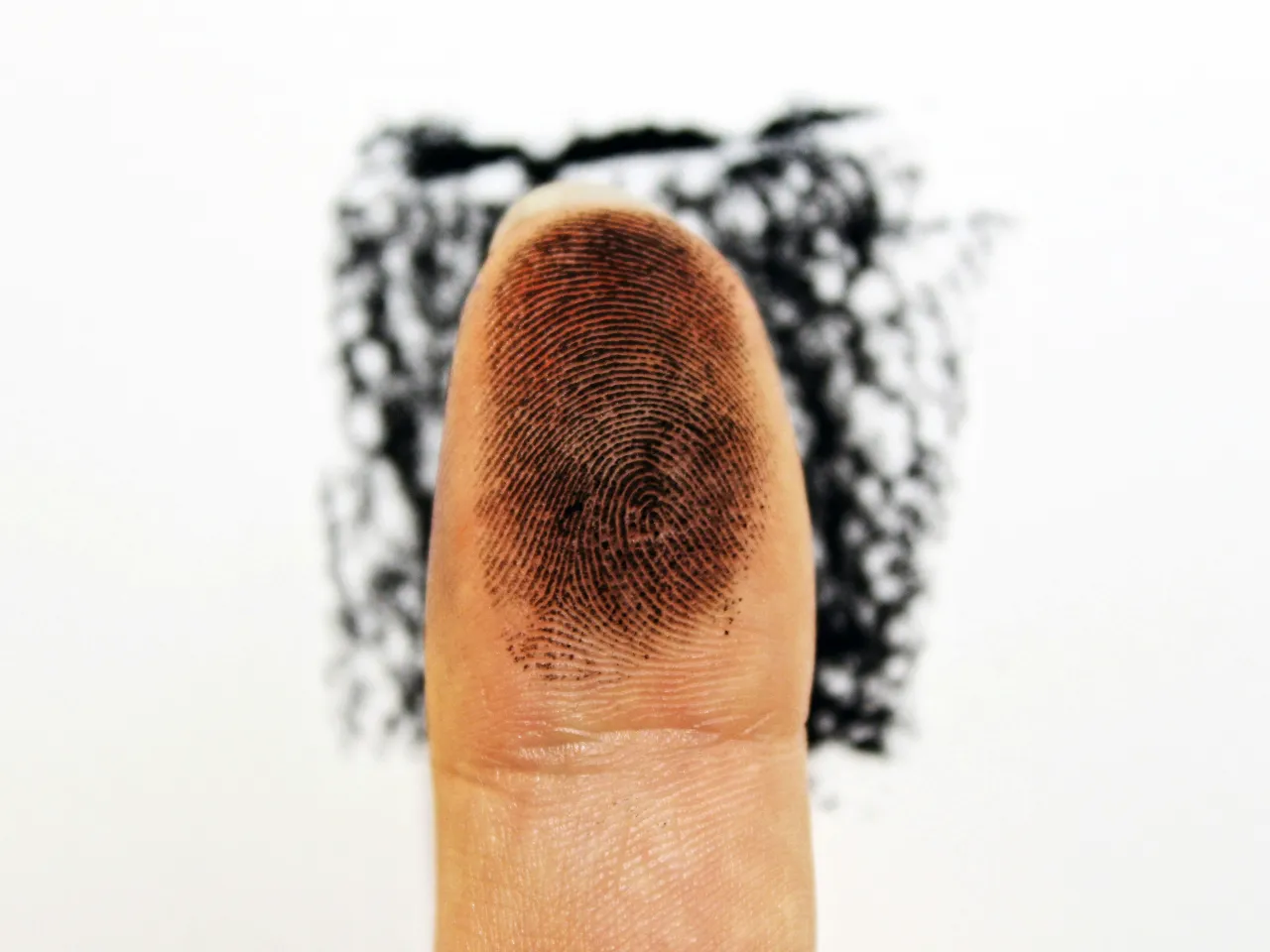
A certified criminal record check resolves both problems by searching the national repository of criminal records biometrically. Prints are submitted to Canadian Criminal Real Time Identification Services, the branch that maintains that collection, and the result confirms identity rather than assuming it. This is the version required for immigration, adoption, federal clearances and police certificates requested by foreign governments. The sequencing for a permanent residence or citizenship file has its own rules, which we set out in our guide to the criminal record check for immigration.
In Canada you can be printed digitally at an accredited agency — we do this by appointment at our Ottawa office, where two pieces of government-issued identification, one bearing a photograph, are all you need to bring. Each submission generates a 20-digit Document Control Number linking your prints to the search, and that number stays valid for twelve months before a fresh set is required.
Two Application Streams, Two Different Outputs
The purpose ticked on the consent form changes what comes back. For most travel, work and foreign visa purposes the application runs under the immigration and travel stream, and the certificate is issued to be sent onward to a third party — an employer, a consulate, an immigration authority.
A request made under the Privacy Act is different. It is a personal request for your own information, it returns the record held about you, and the certificate is mailed directly to the person who asked for it rather than released to anyone else. Anyone applying for United States immigration is normally directed to this stream.
Choosing the wrong one is not a formatting error. A Privacy Act result sent to an employer expecting a screening certificate will be questioned, and a screening certificate will not satisfy a body that asked for the full record.
Reading Your Results
Results normally go to the person who applied rather than to the employer, and it is then your decision whether to pass them on. An organization that receives criminal record information may only use it for the purpose it was requested for.
A clear result confirms that no disclosable criminal records were matched against your details. Keep the original safe: where an institution will accept a copy, a notarized true copy travels in its place and leaves the certificate itself intact for the next request. A result showing a match is usually accompanied by a self-declaration form, which the applicant completes and provides to the requesting organization — the police service does not send a candidate’s criminal history directly to an employer for the lower levels.
You generally must be 18 years of age to apply on your own behalf. Nothing formally expires, but institutions apply their own currency rules and commonly treat results older than six to twelve months as stale.
If You Are Living Outside of Canada
Applications can be made from abroad, but the mechanics change: electronic submission is unavailable outside of Canada, so prints are taken locally on an approved card and sent to an accredited Canadian agency for digitization and submission. That is exactly what our online criminal record check service does — we convert international ink prints into digital format and transmit them on your behalf, wherever you happen to live.
The rules on that card are strict and account for most rejected files. Impressions must be taken on the official C-216C form using the ink-and-roll method; digital or live-scan printouts are refused. Two complete sets are needed, with every field filled in and the name, signature and stamp of the official who took them. Abroad, that official can be a police service, an embassy or consulate, a government department, a notary public, or a private fingerprinting company holding a memorandum of understanding with a local police force.
A Canadian result also rarely satisfies a foreign authority on its own. Depending on the destination, it may need an apostille — a certificate whose scope is narrower than most people assume, as our explainer on what “document apostilled” actually means sets out — or authentication followed by consular legalization where the country sits outside the Hague Convention. The practical steps, and which of the six Canadian authorities has jurisdiction, are covered in how to get an apostille in Canada.
Where the Certificate Goes Next
For most people the check is one item in a larger file, and the rest of that file moves on the same timetable.
Gulf employers are the clearest case. None of these destinations belongs to the Hague Convention, so a police certificate bound for any of them needs full consular legalization rather than an apostille.
The Emirates accounts for most of this work. Fingerprint records are named explicitly among the documents the mission attests, and the route runs through the UAE Embassy attestation process in Ottawa — the only active UAE mission in the country, since the Toronto office is permanently closed. Anyone whose paperwork is destined for Dubai specifically follows the same three stages: notarization where a copy is involved, authentication by a Canadian authority, then attestation by the embassy. Documents must be in English or Arabic, so a certified Arabic translation is often required.
The same structure applies elsewhere in the region with different details at the mission stage, which we cover separately for the Qatar embassy in Ottawa and the Kuwait embassy.
A police certificate also rarely travels alone. A work permit application usually pairs it with an attested diploma, and anyone relocating with a family adds vital records on top. Our guides to degree attestation, marriage certificate attestation and birth certificate attestation set out how each of those moves through the same chain, and the wider picture for anyone moving to Dubai from Canada explains where the paperwork sits in the overall timeline.
Submit them together rather than one at a time. Splitting a family’s documents across separate mailings multiplies courier costs and guarantees that one certificate is ready while another is three weeks behind it.
Need Help With the Criminal Record Check Process?
Legalization Service Centre is an accredited fingerprinting company, authorized to submit digital prints and to convert international ink prints for processing through Canadian Criminal Real Time Identification Services. That access covers a full search of the national repository, including the Privacy Act Report database, which returns the complete record held on file rather than the filtered extract a screening check produces.
We review every form and identity document before anything is couriered, because a typo in a name or an unticked box on the consent form invalidates a search that has already been paid for. Typical processing once submitted is five to twenty business days, faster where nothing is found and longer where the repository returns a match. Certificates are delivered anywhere in Canada or abroad by tracked courier.
Since 2009 we have also handled apostille, authentication and legalization of Canadian documents, so where a certificate has to be recognized overseas the check and the certification that follows are handled as one file rather than two.
Get Your Documents Ready for International Use
Before you request a police record check, settle three questions: which type the organization actually needs, whether it must be based on prints, and whether the finished certificate will be used abroad. Those answers determine everything that follows, and all three are cheaper to establish now than to correct later.
Whether you need fingerprinting, an apostille, a certified translation, or notarization of supporting documents, Legalization Service Centre can guide you through every stage.
Need help with document apostille/legalization/authentication/attestation — and/or criminal record check in Canada? Contact us via our form, call us at +1-613-501-0555 (WhatsApp available) or +1-800-857-1215 (toll-free), fax us via 1-844-786-2001, or text us at info@lsccanada.ca.